(1841–1927)
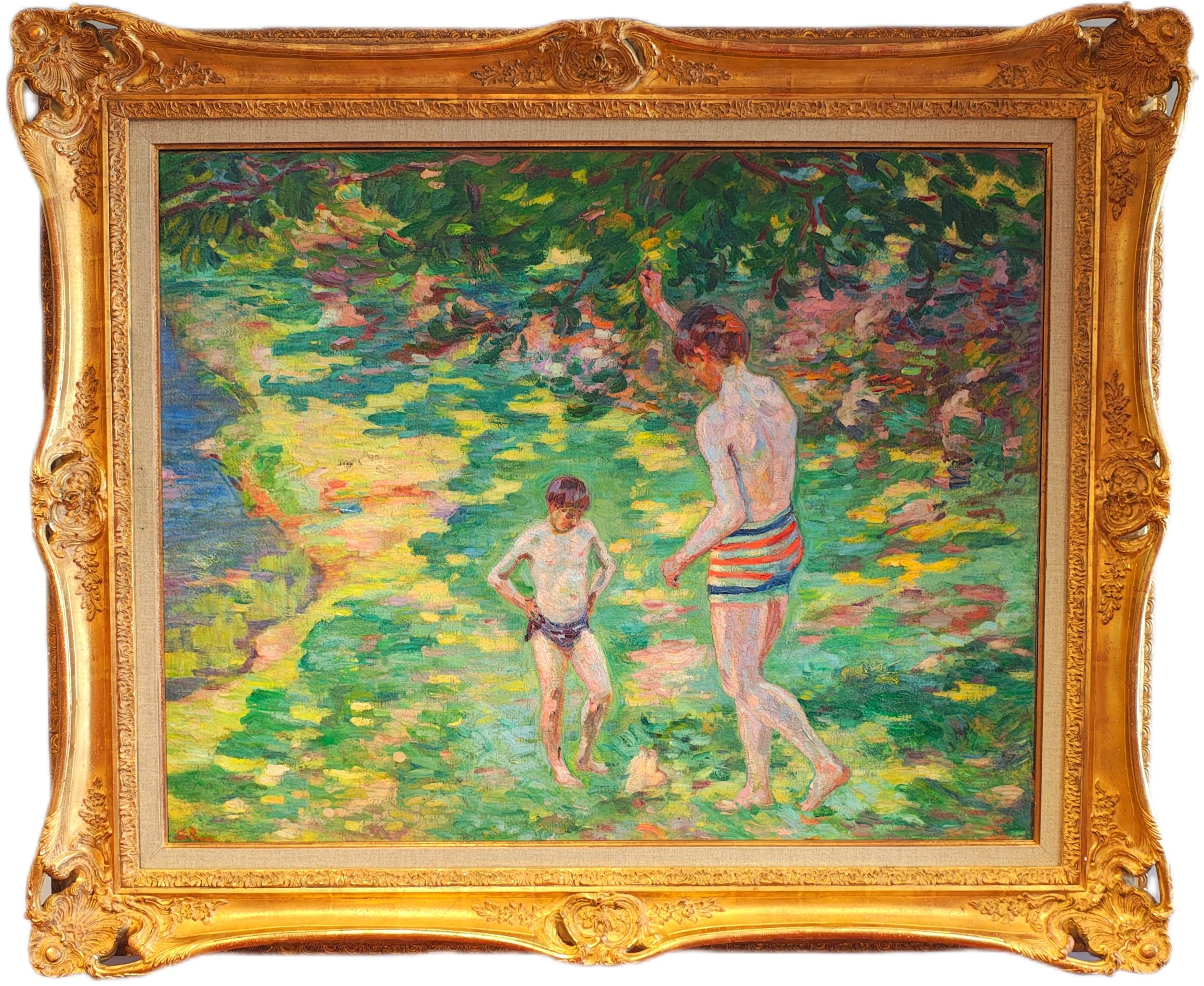
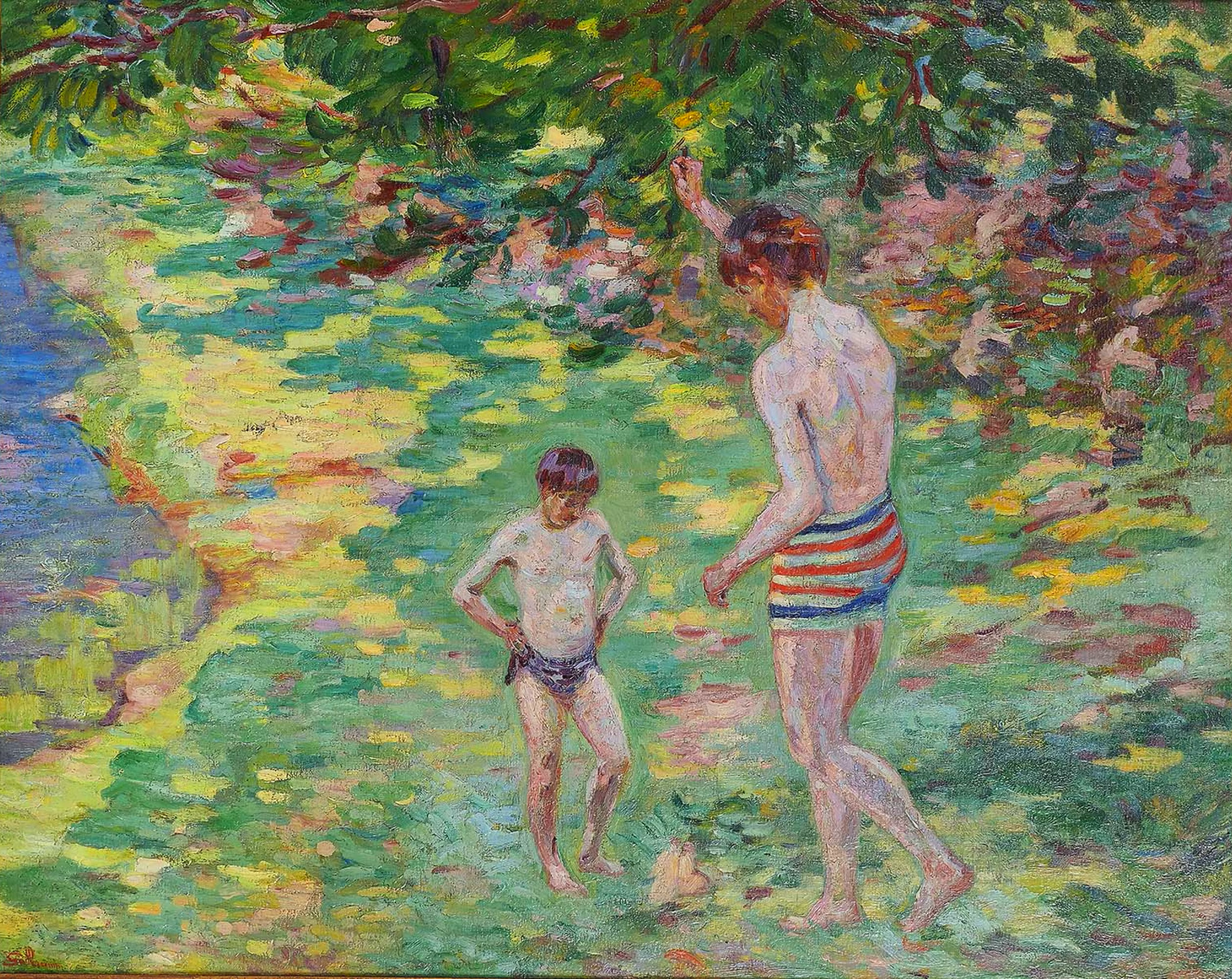
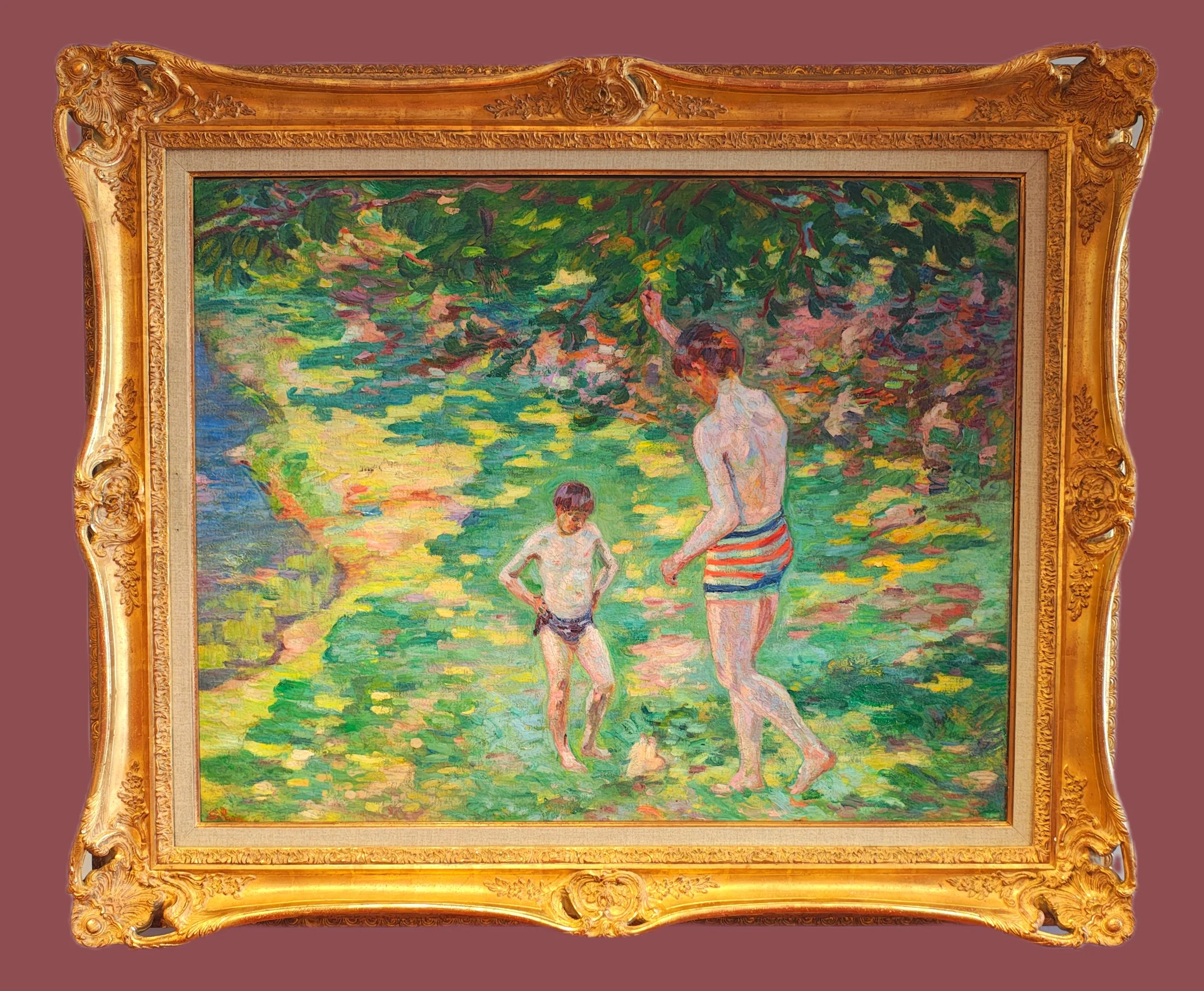
Baigneurs à Crozant, circa 1905
Oil on canvas.
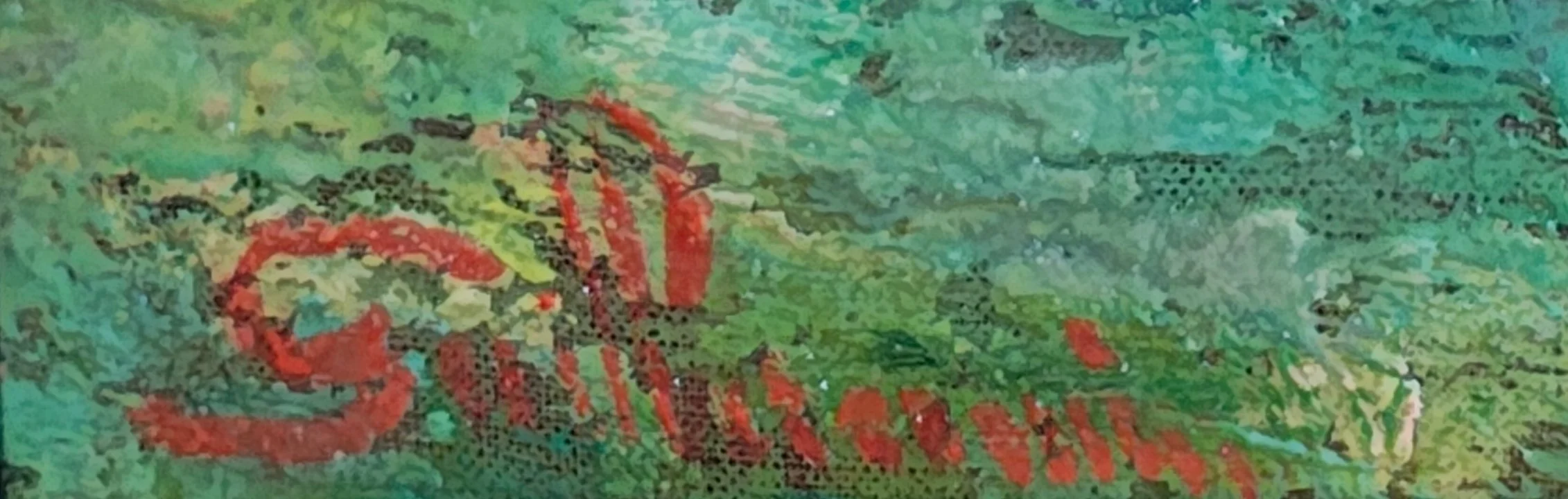
Signed lower left.
73 x 92 cm / 28.7 × 36.2 in
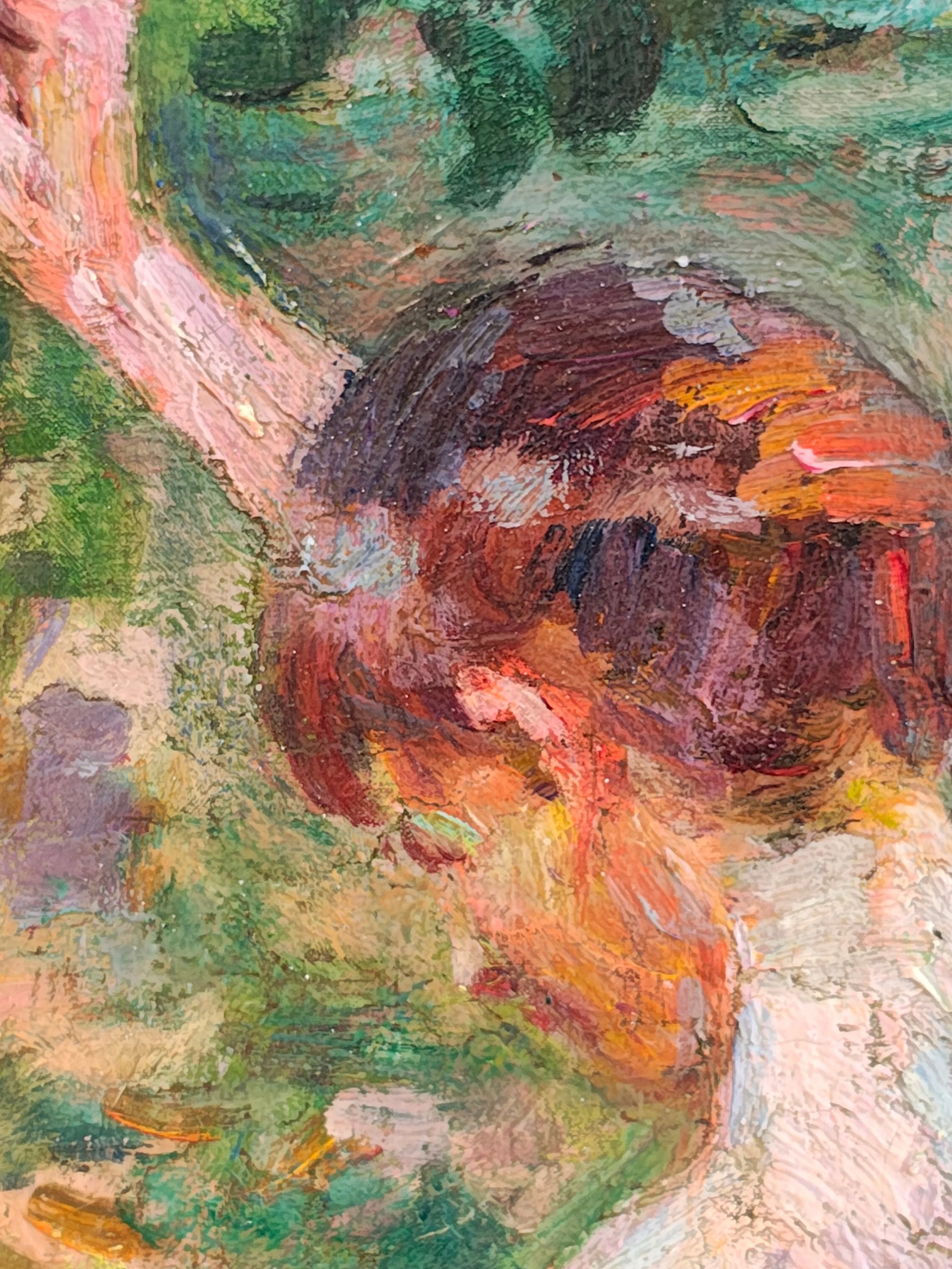
Our painting was created during a period in which Guillaumin intensified his colour palette. While his early works were still defined by subdued tones, around 1900 he began experimenting with bold ochres, violet, and purple hues—a development that even impressed the young Fauve artist Othon Friesz. In Baigneurs à Crozant, the figures of the bathers merge with the surrounding landscape: the fluid brushstrokes unify the water at the left edge of the canvas, the skin, and the vegetation into a single, vibrating surface, with particular attention given to the paused action of the figures and the reference to an object placed between them. Typical of Guillaumin is the immediacy with which he worked—painting en plein air, directly in front of the subject, to capture the fleeting moods of the moment.
Provenance:
Auction at Sotheby’s London, 15 April 1970.
Literature:
G. Serret and D. Fabiani, A. Guillaumin, Catalogue Raisonné de l'œuvre peint, no. 619
______
Armand Guillaumin
(1841–1927)
Baigneurs à Crozant, um 1905
Öl auf Leinwand.
Unten links signiert.
73 x 92 cm
Provenienz:
Auktion bei Sotheby’s London am 15. April 1970.
Literatur:
G. Serret und D. Fabiani, A. Guillaumin, Catalogue Raisonné de l'œuvre peint, Nr. 619
Unser Gemälde entstand in einer Phase, in der Guillaumin seine Farbpalette intensivierte. Während seine frühen Werke noch von gedämpften Tönen geprägt waren, experimentierte er um 1900 mit kräftigen Ockern, Violett- und Purpur Nuancen – eine Entwicklung, die sogar den jungen Fauvisten Othon Friesz beeindruckte. In den Baigneurs verschmelzen die Figuren der Badenden mit der umgebenden Landschaft: Die fließenden Pinselstriche lassen das Wasser links am Bildrand, Haut und Vegetation zu einer einzigen, vibrierenden Oberfläche werden wobei dem Innehalten einer Handlung der Personen und der Hinweis auf ein zwischen ihnen lagerndes Objekt besondere Beachtung verdient. Typisch für Guillaumin ist dabei die Unmittelbarkeit – er malte en plein air, direkt vor dem Motiv, und fing so die flüchtigen Stimmungen des Moments ein.